

Behind the Scenes: What a Buying Agency Actually Does While Your Order Is in Production
Table of Content
Introduction
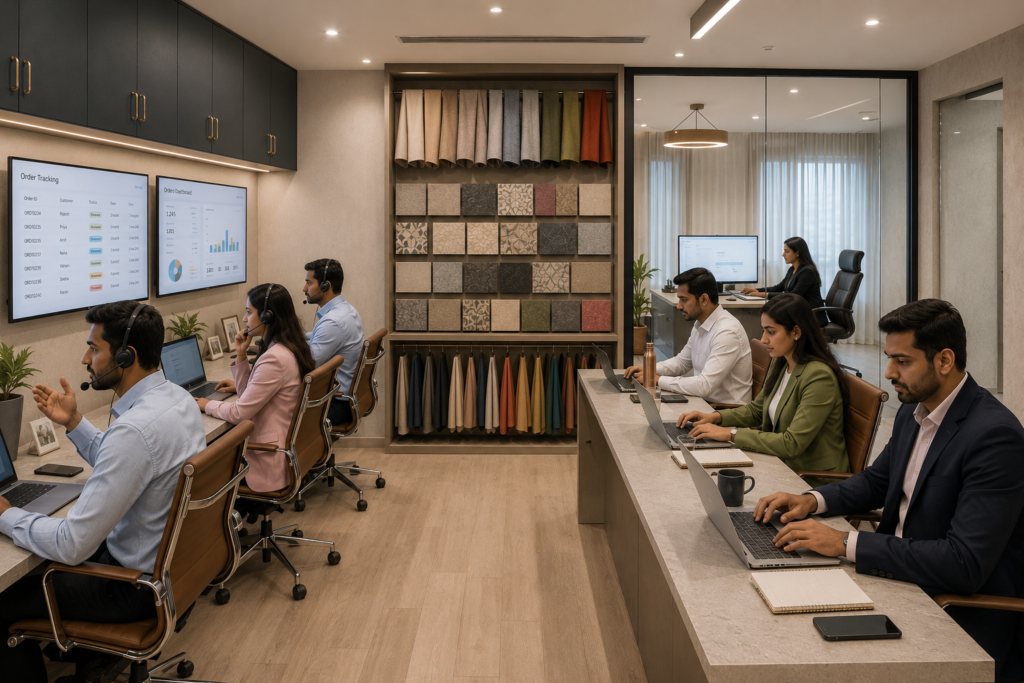
Most buyers have a rough idea of what a buying agency does: they find suppliers, manage orders, and inspect goods. What is less visible and where most of the value actually lives – is the continuous, invisible work that happens between a buyer’s order placement and their goods arriving at port.
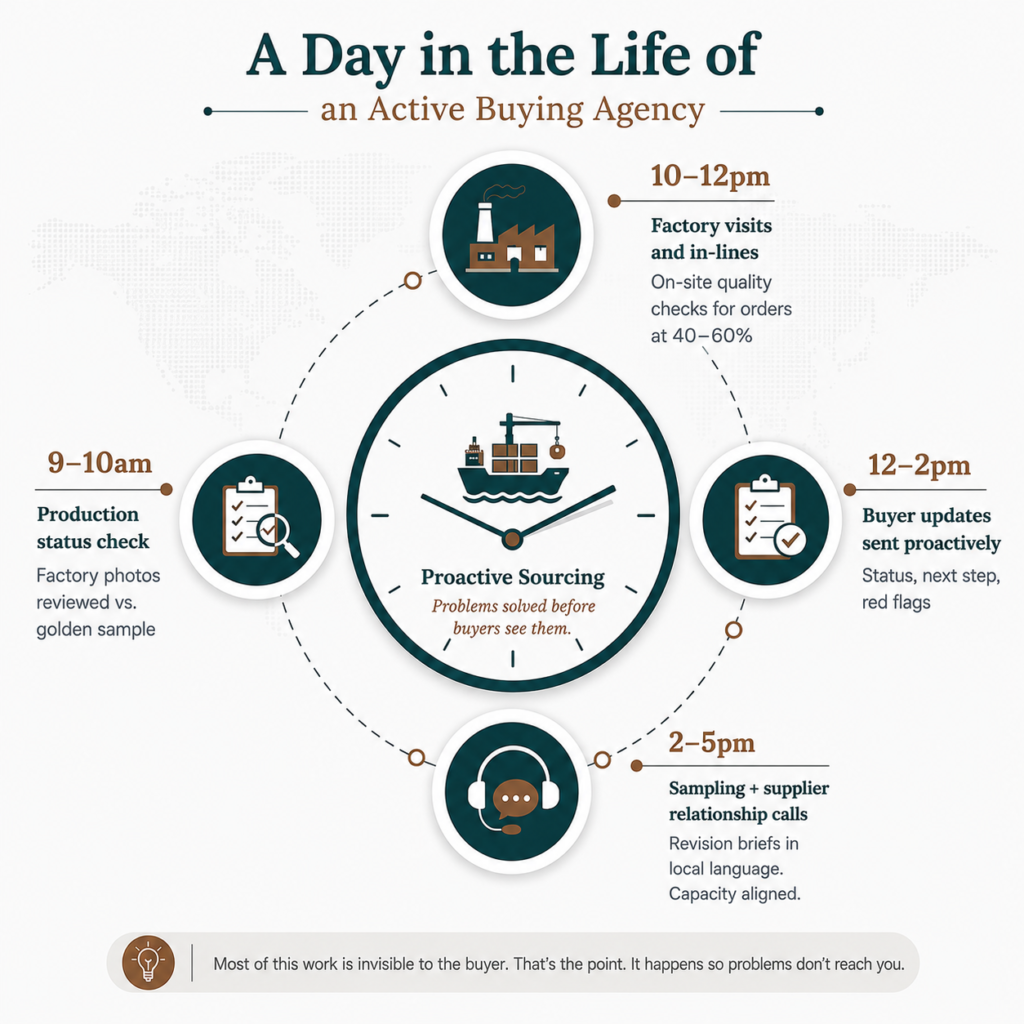
Here is what a typical working day looks like inside a buying agency managing active production across multiple buyers.
Morning: Production Status Check
Before 10am, the team has reviewed the status of every active order in production. For any order at or past 50% of its production timeline, an on-site check is either scheduled or in progress. Photographs from factory visits the previous day are reviewed against golden sample standards.
If anything is drifting – a finish inconsistency appearing in early pieces, a raw material substitution the factory has made without notification, a production pace that suggests a delivery date risk – this is the window to address it. Not after production is complete. Now.
The difference between a problem caught at 50% production and a problem caught at pre-shipment inspection is measured in weeks and thousands of dollars. The daily status rhythm is not administrative overhead. It is risk management.
Midday: Buyer Communication
Each buyer receives a status update on their active orders at whatever frequency was agreed at programme setup – weekly for stable orders, more frequently when something needs attention. Updates are structured and specific: production stage, any deviations from plan, next milestone date.
This communication is not reactive. The agency is not waiting for buyers to ask “what is happening with my order?” The information goes out proactively, whether there is good news or a complication to discuss.
Afternoon: Supplier Relationships and New Development
Part of every day is relationship maintenance with the factory network – not formal meetings, but the ongoing conversation that keeps relationships warm and informed. A call to a Moradabad workshop about capacity for Q4. A WhatsApp exchange with a Jaipur textile producer about a new dye option a buyer has requested.
For buyers in active product development, this is where sampling follows up happen. Revision notes from an approved sample iteration go back to the factory in the local language with visual references. Ambiguity – the main cause of sampling delay – is removed at this step, not discovered when the next sample arrives.
The Work You Pay For Is the Work You Don't See
A buyer who receives a clean inspection report and an on-time shipment might underestimate the work that produced that outcome. The daily status checks, the in-line visits, the factory conversations in Hindi or Urdu, the revision brief sent at 3pm so the factory can act on it the next morning – this is the infrastructure that makes reliable sourcing possible.
The commission pays for all of it. Not just the supplier introduction. The whole engine.
This Is What Active Management Looks Like
Azoonis manages every active order with daily oversight, structured communication, and on-the-ground factory presence across all key clusters. Your order isn’t filed and forgotten. It is actively managed every day it is in production.