

5 India Sourcing Truths Which Buyers Take Years to Figure Out
Table of Content
Introduction
The most useful sourcing knowledge doesn’t come from guides. It comes from the buyers who have already made the expensive mistakes, processed them, and changed how they work. These are the things that consistently come up when experienced India importers talk honestly about what they wish someone had told them.
WhatsApp Is Fast. Email Is Evidence
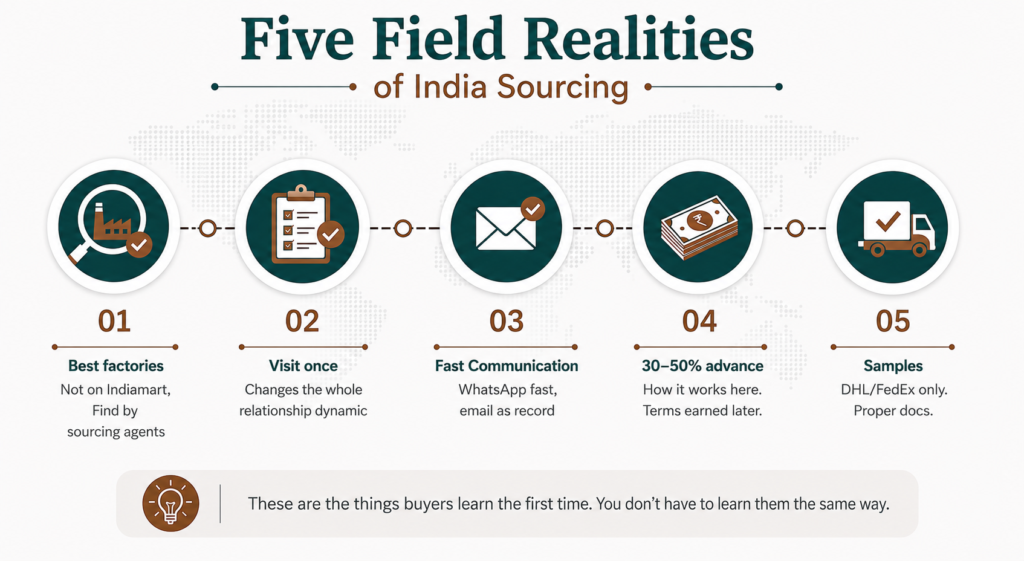
Indian business communication runs heavily on WhatsApp. It is fast, informal, and effective for daily coordination. It is terrible for documentation. A verbal commitment on WhatsApp about price, delivery, or specification is worth very little when something goes wrong.
Use WhatsApp for speed. Confirm every decision that matters in writing by email. Price confirmed on a call? Follow up with an email summary. Delivery date adjusted? Email confirmation. This discipline prevents more disputes than any contract clause.
The Factory Visit Changes Everything
Buyers who have visited their India factories once consistently describe it as a turning point. You understand what the factory can actually do, and what it cannot. You see the working conditions. You meet the people. You understand why certain lead times are what they are.
More importantly, the factory owner sees you. You become a real person, not an email address. The relationship shifts in ways that are hard to quantify but obvious in practice. Priority treatment, earlier problem notification, more honest communication about capacity.
One buyer told us: “I’ve been sourcing from this factory for two years. I visited once. Every order since has been handled differently than the ones before. I didn’t change anything about what I ordered. I just showed up.”
Payment Terms Are Negotiated Over Time, Not Upfront
New buyers arriving in India expecting Net-30 payment terms are regularly disappointed. Thirty to fifty percent advance is standard with new suppliers, and it is not negotiable on the first order.
This is not a trust deficit directed at you specifically. It is how artisan workshops manage cash flow. The advance funds the raw material purchase. Without it, the factory cannot begin production.
As the relationship matures over 3 to 5 orders, better payment terms become available. Some factories will extend net terms to buyers they know well. But it is earned, not granted.
Sample Couriers Matter More Than You Think
The sample journey from an Indian workshop to a European warehouse is underestimated by most buyers. Poorly packed samples arrive broken. Samples stuck in customs add two weeks to your timeline. Samples shipped with incorrect declarations create regulatory complications.
Ask your buying agency or factory to use a known logistics partner (DHL, FedEx) with proper export documentation. A sample that arrives damaged does not represent the product. A sample that arrives correctly is the foundation for a production decision.
India's Best Factories Are Not on IndiaMart
This is the one that buyers find hardest to accept early on. The manufacturers that produce the best quality, deliver consistently, and have years of established export relationships are not spending their time on IndiaMart listings. They are fully occupied with their existing buyer relationships. They are reached through introductions, through trade shows, and through buying agencies with prior relationships.
The factories that appear prominently on directories and respond quickly to cold inquiries are often the ones with capacity because they have not yet built the kind of long-term buyer relationships that keep good factories busy. There are exceptions, but the pattern is consistent enough to plan around.
Start With the Lessons Already Learned
Azoonis brings years of on-the-ground India sourcing experience to every buyer relationship. The hard lessons have already been absorbed – so yours doesn’t have to be.