

India vs China vs Vietnam vs Indonesia: The Honest Sourcing Comparison
Table of Content
- The Conversation Happening in Every Buying Office Right Now
- The State of Global Home Decor Sourcing: Key Numbers
- Country-by-Country Breakdown: The Real Story
- Vietnam: Asia's Manufacturing Star ” With Significant Limitations for Home Decor
- Indonesia: Underrated for Specific Categories, Limited for Broader Range
- India: The Complex, Rewarding, Misunderstood Giant
- The Head-to-Head Comparison: India vs. China vs. Vietnam vs. Indonesia
- The Strategic Sourcing Mix: How Smart Importers Are Structuring Their Portfolios
- What India Can Give Your Brand That Nothing Else Can
- Five Things You Must Prepare For Before Starting India Sourcing (That Nobody Tells You)
- Conclusion: India Isn't the Alternative. India Is the Advantage.
1. The Conversation Happening in Every Buying Office Right Now
Ask any home decor buyer at a trade show what they’re thinking about most in 2024, and the conversation almost always lands on the same place: supply chain diversification.
The era of “China-plus-one” maintaining primary China sourcing while adding a secondary country as backup has accelerated into a more fundamental rethinking of where products come from, why, and at what risk.
Importers who had 90%+ of their supplier base in China discovered during 2020“2023 that this concentration was not a strategy it was a vulnerability. Supply chain shutdowns, container price spikes, trade tariffs (US-China Section 301 tariffs of 7.5“25% across many home decor categories), rising Chinese wages, and geopolitical uncertainty all hit simultaneously.
Vietnam emerged as the first major beneficiary of this diversification. Indonesia and Bangladesh benefited in specific categories. And India perhaps the most complex and most misunderstood of the major sourcing destinations has quietly become the choice of sophisticated buyers who want something China and Vietnam fundamentally cannot provide: truly artisanal, culturally distinctive products at scale.
This piece is for buyers who are making the sourcing geography decision seriously. Not with marketing fluff, but with honest data, real trade-offs, and an on-the-ground view of what each country actually delivers.
2. The State of Global Home Decor Sourcing: Key Numbers
Before the comparison, context:
- The global home decor market was valued at approximately US$ 682 billion in 2023 and is projected to reach $898 billion by 2028. (Source: Mordor Intelligence)
- China remains the world’s largest exporter of home furnishings, accounting for approximately 40% of global imports in major markets.
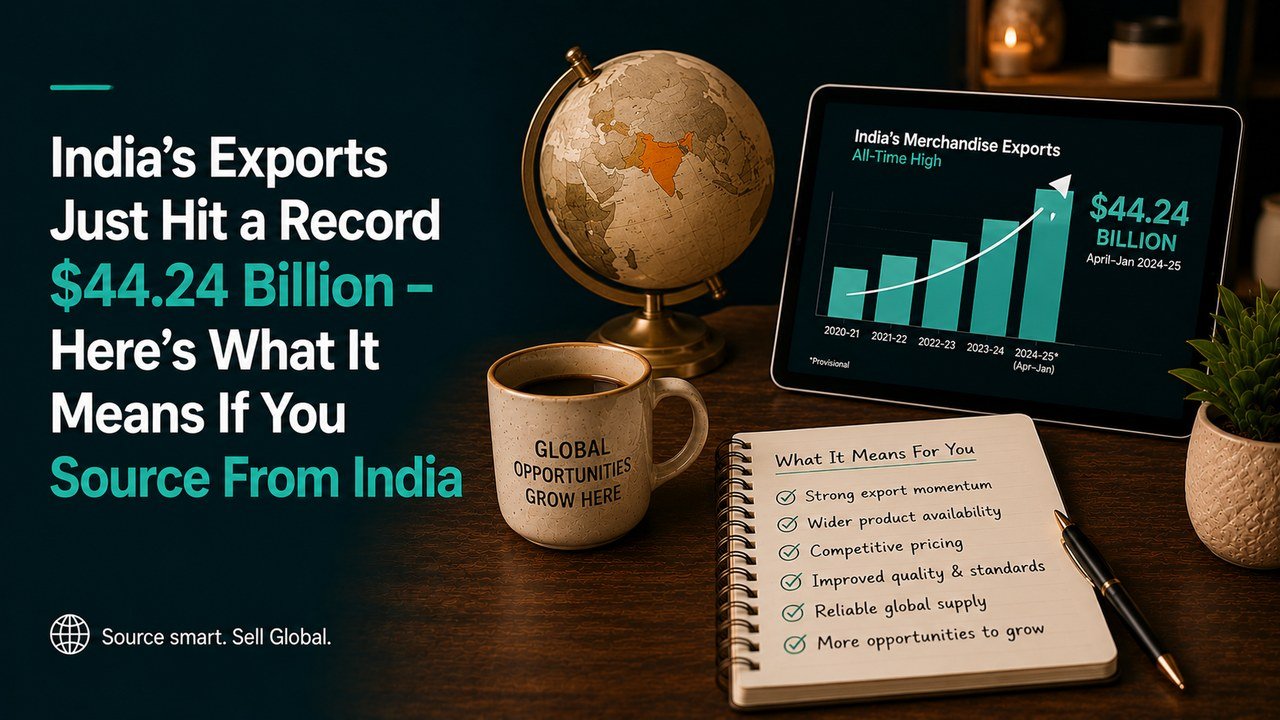
- India is the world’s second-largest handicraft exporter by volume, with US$ 3.6 billion in handicraft exports in FY2023
- Vietnam’s furniture and home decor exports reached US$ 14.8 billion in 2023, making it the second-largest furniture exporter globally.
- Indonesia exported US$ 2.5 billion in wooden furniture and home decor in 2023.
- EU import duties on Indian handicrafts under the GSP scheme are significantly lower (0“3.7%) compared to MFN duties applicable to some Chinese categories.
3. Country-by-Country Breakdown: The Real Story
China: Still the Benchmark, But the Paradigm Is Shifting
What China does best:
China’s home decor manufacturing ecosystem is without parallel in terms of sheer breadth, depth, and supply chain integration. A single industrial park in Foshan or Shunde can supply everything from raw materials to finished, packaged, ready-to-retail furniture. No other country comes close on end-to-end supply chain integration.
Speed is China’s defining advantage. Sample lead times of 7“14 days. Production lead times of 15“30 days for standardised products. Mass production capacity that can scale from 500 units to 500,000 units in a single factory.
The honest challenges:
- Cost is rising. China’s average manufacturing wage in 2023 was approximately $900/month up from $300/month in 2010. For labour-intensive home decor categories like hand-crafted items, this has materially impacted landed cost competitiveness.
- Trade tariffs (for US importers): Section 301 tariffs add 7.5“25% to the cost of many Chinese-made home decor products entering the US. This alone has driven significant sourcing migration.
- Sustainability pressure: EU and UK importers increasingly face questions from their customers and corporate sustainability commitments about China sourcing ” particularly in categories linked to deforestation (bamboo, rattan), cotton (Xinjiang concerns), or opaque supply chains.
- Product differentiation challenge: If you’re sourcing the same products that hundreds of other importers are buying from the same Chinese factories, your competitive position is thin. China excels at mass production, but truly unique, artisanal design differentiation is harder to achieve.
- Best categories to continue sourcing from China: Mass-produced furniture, electrical home decor (lamps, LED lighting), plastic and resin items, large-volume standardised textiles.
- Bottom line: China is not being replaced ” it’s being supplemented. Buyers who are reducing China dependency are typically not eliminating China; they’re reducing from 90%+ to 50“60% and diversifying the rest.
4. Vietnam: Asia's Manufacturing Star ” With Significant Limitations for Home Decor
What Vietnam does best:
Vietnam has become one of the world’s most important furniture manufacturing hubs, particularly for flat-pack and semi-knockdown furniture, rattan and bamboo furniture, and some home textiles. The combination of competitive labour costs (average manufacturing wage ~$300“$350/month), free trade agreements (Vietnam-EU FTA offers 0% duties on most categories), and strong government support for export manufacturing has made Vietnam very attractive.
For European buyers specifically, the EVFTA (EU-Vietnam Free Trade Agreement) is a significant advantage ” most home decor and furniture categories enjoy 0“7% duty rates vs. MFN rates. For US importers, Vietnam is the single biggest China tariff beneficiary.
The honest challenges:
- Capacity constraints in artisanal categories: Vietnam’s manufacturing strength is in industrial and semi-industrial production, not artisanal handicrafts. If you’re looking for handpainted ceramics, hand-embroidered textiles, or intricately carved wood decor, Vietnam’s capacity is thin compared to India or Indonesia.
- Rising labour costs and capacity squeeze: Vietnam’s labour cost advantage over China is narrowing. The manufacturing boom has created capacity tightness in key industrial zones lead times have lengthened, and minimum order quantities have increased in some categories.
- Limited design vocabulary in handicrafts: Vietnam’s artisan traditions, while genuine and beautiful (lacquerware, conical hats, silk), are narrower in scope compared to India’s enormously diverse design heritage. Building a distinctive, culturally rich home decor range purely from Vietnamese sourcing is challenging.
- Compliance complexity for natural materials: Vietnam is a significant source of rattan and bamboo home decor, but FSC certification for Vietnamese wood products can be difficult to obtain across the supply chain.
- Best categories to source from Vietnam: Flat-pack and KD furniture, rattan and bamboo furniture and decor, natural fibre home textiles, lacquerware accents.
5. Indonesia: Underrated for Specific Categories, Limited for Broader Range
What Indonesia does best:
Indonesia is the world’s second-largest tropical timber resource, and this shows in its home decor manufacturing. Teak furniture, carved wooden home accessories, woven natural fibre decor (rattan, seagrass, water hyacinth), and batik textiles are all genuine strengths. Indonesian teak furniture is globally recognised for quality, and the country has made significant progress on FSC and sustainable forestry certification.
The honest challenges:
- Geographic complexity: Indonesia’s manufacturing is spread across multiple islands ” Java (furniture), Bali (handicrafts), Sumatra (natural fibres). This geographic spread adds logistics complexity and cost compared to more concentrated manufacturing zones.
- Infrastructure limitations: Outside of Java, port infrastructure, logistics efficiency, and supply chain reliability are more variable than China, Vietnam, or India’s major manufacturing hubs.
- Capacity constraints: Indonesia punches above its weight in certain niche categories but does not have the broad industrial depth of China or India for diversified home decor sourcing.
- Higher freight costs to Europe: Indonesia’s geographic position means freight to Northern Europe typically adds 3“5 days and $200“$400 per container compared to India.
- Best categories to source from Indonesia: Teak furniture, rattan and seagrass decor, carved wood accessories, batik home textiles.
6. India: The Complex, Rewarding, Misunderstood Giant
What India does best and why it’s fundamentally different from every other sourcing destination:
India’s home decor and handicraft manufacturing is not just a competitive alternative to China it’s a different category of product entirely. This is the insight that reframes the entire sourcing decision.
When you source home decor from China, you’re primarily buying manufactured goods with design applied. When you source from India, you’re often buying craft products embedded with cultural meaning, made using techniques passed down through generations, with a level of artisanal character that cannot be factory-replicated.
This distinction matters enormously for your brand positioning:
- A brass candleholder from Moradabad, made using the same dhokra casting technique that Indian metalworkers have used for 4,000 years, tells a story that a machine-made Chinese equivalent cannot.
- A block-printed tablecloth from Jaipur, stamped by hand using carved wooden blocks, carries a design provenance that mass printing cannot replicate.
- A hand-knotted wool rug from Bhadohi or Mirzapur, made by a craftsperson who has spent years developing their knotting skill, is not “the same product” as a machine-tufted equivalent from China.
This is why the most successful home decor importers building premium, design-led product lines in Europe and the USA have India as a core part of their sourcing strategy ” not just for cost, but for product distinctiveness.
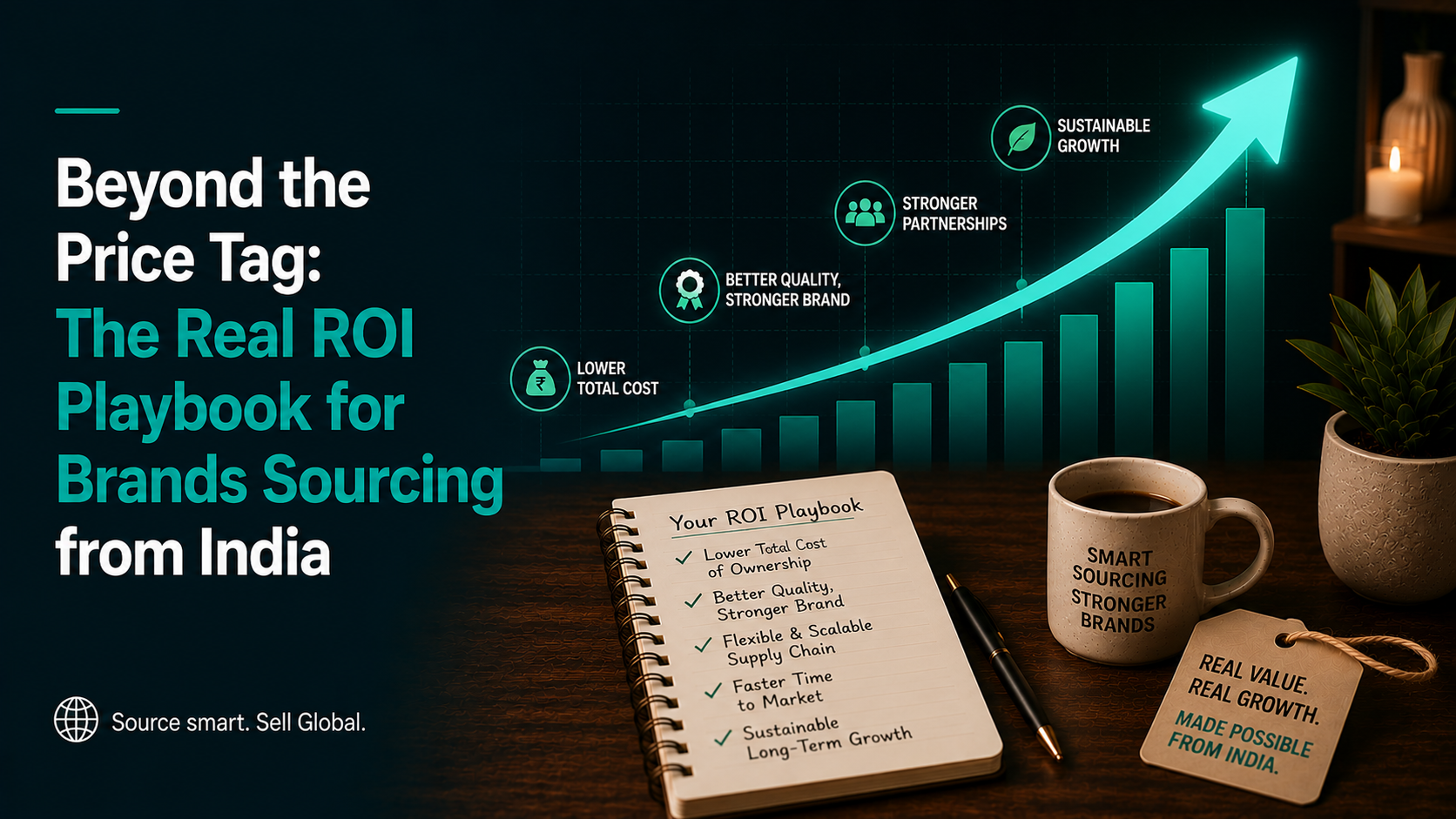
India’s key competitive advantages by the numbers:
Advantage | Data Point
- Artisan workforce : 7+ million employed in handicrafts
- Product range : 35,000+ distinct handicraft product categories
- Manufacturing clusters : 744 handicraft clusters across the country
- Export growth : 18%+ CAGR in handicrafts exports 2021“2023
- EU duty advantage : GSP scheme: 0“3.7% vs. standard MFN rates
- English proficiency : Among highest in Asia across supply chain
- IP protection : Strong legal framework via Indian Patent Office
- Government support : Active export promotion via EPCH, textile councils
The honest challenges of India sourcing:
- Speed: India is not optimised for speed. Artisan production is inherently slower than industrial production. Sample lead times run 3“6 weeks. Production lead times of 45“90 days are standard. Buyers who need 4-week turnarounds will be frustrated. Buyers who plan 4“6 months out will be fine.
- Quality consistency: Handmade means each piece is slightly different ” this is a feature, not a bug, for premium buyers. But without proper quality oversight, “slightly different” can become “inconsistently acceptable.” Pre-shipment inspection is non-negotiable.
- Fragmentation: India has hundreds of thousands of manufacturers, most of them small workshops. Finding the right one, vetting it, and building a reliable relationship requires local expertise that is genuinely difficult to replicate from overseas.
- MOQ challenges: Many Indian artisan manufacturers cannot produce economically at very low volumes (under 50“100 pieces per SKU). This is a real constraint for importers with highly diversified, small-quantity product ranges.
- Payment terms: 30“50% advance is standard. Net-30 or Net-60 terms that European importers are used to with larger Chinese factories are rare in India’s artisan sector.
7.The Head-to-Head Comparison: India vs. China vs. Vietnam vs. Indonesia
Factor | India | China | Vietnam | Indonesia |
Artisanal/handicraft depth | ★★★★★ | ★★ | ★★★ | ★★★★ |
Industrial/mass production | ★★★ | ★★★★★ | ★★★★ | ★★★ |
Labour cost | ★★★★ | ★★★ | ★★★★ | ★★★★ |
Lead time (speed) | ★★★ | ★★★★★ | ★★★★ | ★★★ |
Quality consistency | ★★★★ (with QC) | ★★★★★ | ★★★★ | ★★★★ |
Design uniqueness | ★★★★★ | ★★★ | ★★★ | ★★★★ |
EU duty advantage | ★★★★ (GSP) | ★★★ | ★★★★★ (EVFTA) | ★★★ |
Supplier fragmentation | High (complex to navigate) | Low (easy) | Medium | Medium |
Compliance capability | ★★★★ (varies by agent) | ★★★★★ | ★★★★ | ★★★ |
Freight to Europe | ★★★★ | ★★★★ | ★★★★ | ★★★ |
Sustainable credentials | ★★★★★ (artisanal heritage) | ★★★ | ★★★ | ★★★★ (teak FSC) |
8. The Strategic Sourcing Mix: How Smart Importers Are Structuring Their Portfolios
The most strategically sophisticated home decor importers don’t pick one country ” they deliberately build a multi-country sourcing portfolio that plays to each country’s strengths.
A typical evolved sourcing portfolio for a European home decor wholesale importer:
- India (30“40% of range): Premium artisanal home decor, handcrafted textiles, metalware, ceramics, carved wood. High-differentiation, medium-to-premium price points. Core of the “story-led” product range.
- China (30“40% of range): Mass-produced furniture, lighting, seasonal decoratives, standardised textile basics. High volume, competitive pricing, fast replenishment.
- Vietnam/Indonesia (15“25% of range): Natural material furniture and decor (rattan, seagrass, teak), specific regional craft categories. FTA duty advantages.
- Eastern Europe / Portugal / Morocco (5“15%): Near-sourcing for trend-reactive categories, premium positioning, reduced carbon footprint storytelling.
This mix delivers three things simultaneously: cost competitiveness, product differentiation, and supply chain resilience.
9. What India Can Give Your Brand That Nothing Else Can
Here’s the dimension of India sourcing that doesn’t appear in price comparison tables but may be the most commercially valuable over a 5-year horizon:
Story. Indian craftsmanship carries centuries of history. The dhokra brass caster in Moradabad, the block printer in Sanganer, the carpet weaver in Mirzapur ” these are not factory workers. They are practitioners of living craft traditions. And in an era where consumers increasingly want to know the story behind what they buy, where provenance and authenticity drive purchasing decisions, that storytelling potential has real commercial value.
European retailers who have built their India sourcing around this narrative ” transparently communicating the craft story, the artisan community, the material heritage ” have achieved gross margins 15“25% higher than comparable products sourced from industrial factories, because the story enables premium pricing.
This is India’s structural advantage that no country can replicate: a living, breathing, 4,000-year-old design and craft tradition, accessible today through the right sourcing infrastructure.
10. Five Things You Must Prepare For Before Starting India Sourcing (That Nobody Tells You)
- Slower pace = better relationships, not failure.
Indian business culture prioritises relationship-building. Initial interactions may feel slower, more personal, and less transactional than what you’re used to from Chinese or Vietnamese trading companies. This is a feature. The buyers who adapt their communication style investing time in relationship-building rather than pushing for immediate commercial transactions ” unlock significantly better terms, priority production slots, and design exclusivity. - Design communication requires visual tools.
Technical spec sheets that work perfectly with experienced Chinese trading companies may not translate as effectively in India’s artisan sector. Mood boards, physical reference samples, and visual communication often work better than dimensional drawings for new design development. Invest in clear visual briefing materials. - The festive season (Oct“Dec) is capacity hell.
The entire world wants Indian handmade products for Christmas. Indian artisan capacity is finite. Orders placed in September for December delivery will be competing with every other European buyer’s Christmas orders. Build a pre-season buying rhythm that places orders by June for October“December delivery windows. - Raw material price fluctuation is real.
Brass, copper, silver, gemstones, natural fibres the raw material inputs for many Indian home decor categories are commodity-traded or subject to seasonal price fluctuation. Budget for 5“10% price variation year-on-year in metalware and precious metal categories. - Sustainability is genuine, not greenwashing, if you source right.
India’s artisan sector is intrinsically low-carbon: hand tools, minimal energy use, natural materials. But “sustainable” sourcing in India requires you to verify it properly ” FSC for wood, GOTS for organic textiles, fair trade certification where applicable. Don’t assume; verify through your buying agent.
Conclusion: India Isn't the Alternative. India Is the Advantage.
The most sophisticated European home decor importers have stopped thinking of India as a “China alternative” and started thinking of it as a distinct and irreplaceable sourcing opportunity in its own right.
China gives you volume and speed. Vietnam gives you furniture at competitive EU duty rates. Indonesia gives you natural material strength. India gives you something none of the others can: a living craft tradition of extraordinary depth and diversity, at commercial scale, with a growing professional sourcing infrastructure to navigate it.
The question isn’t whether India belongs in your sourcing portfolio. The question is how large a role it plays ” and how soon you build the on-ground infrastructure (specifically, the right sourcing partner) to make it work for your business.
—
Azoonis is India’s leading buying house for home decor and handicraft imports. We help European, American, and Australian importers build transparent, efficient, and commercially excellent India sourcing programmes across metalware, textiles, furniture, ceramics, bamboo, and more. Our offices in Ahmedabad and Moradabad put us at the centre of India’s key manufacturing clusters.