

Your Designs Are Safe in India – If You Set It Up Right
Table of Content
Introduction
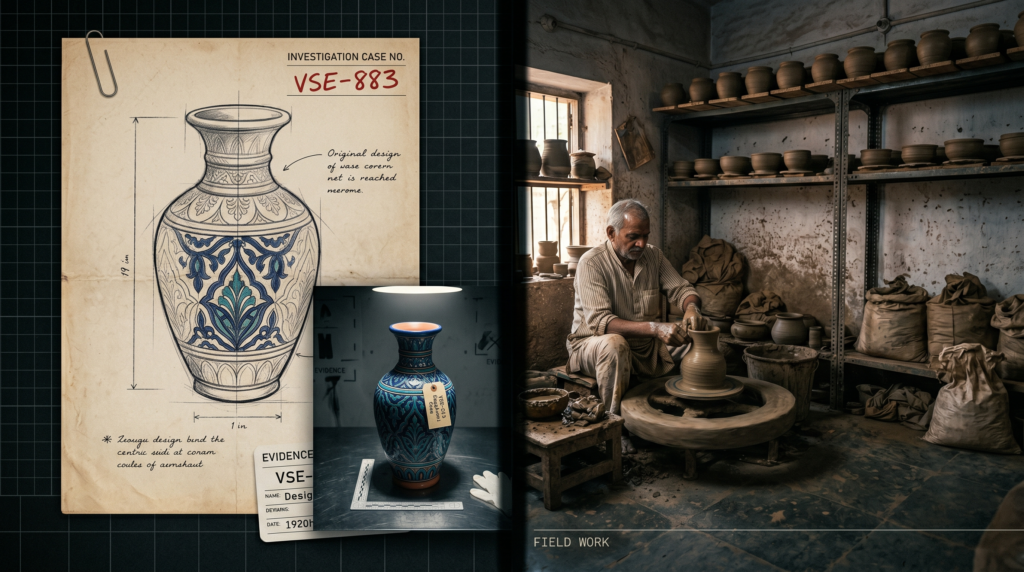
Design protection is one of the most common concerns we hear from buyers considering India sourcing for the first time, especially those developing original products. The worry is understandable: you spend money and time developing a product, share it with a factory in another country, and have no way to watch what they do with it.
The concern is not unfounded. Design replication has happened in India, as it has in every major manufacturing country. But it is far less common than the fear, and it is substantially preventable with the right approach.
Why the Design Risk Is Smaller Than It Feels
India’s artisan manufacturing ecosystem is not structured the same way as China’s. Indian artisan workshops are not optimised for rapid product replication and distribution. Most do not have the marketing infrastructure to sell directly to overseas buyers. And the ones worth working with understand that their reputation with buying agencies depends on behaving with integrity.
A factory that copies a buyer’s design and sells it independently is burning the bridge with the buying agency that brought them that buyer. Given that buying agencies represent multiple buyers and ongoing business, the calculus is unfavourable for the factory.
Trust is the real design protection infrastructure in India. It is built through relationships, sustained through ongoing business, and enforced through the agency’s leverage as the factory’s source of multiple buyers. A factory that betrays one buyer loses all of them.
The Legal Layer: What to Put in Writing
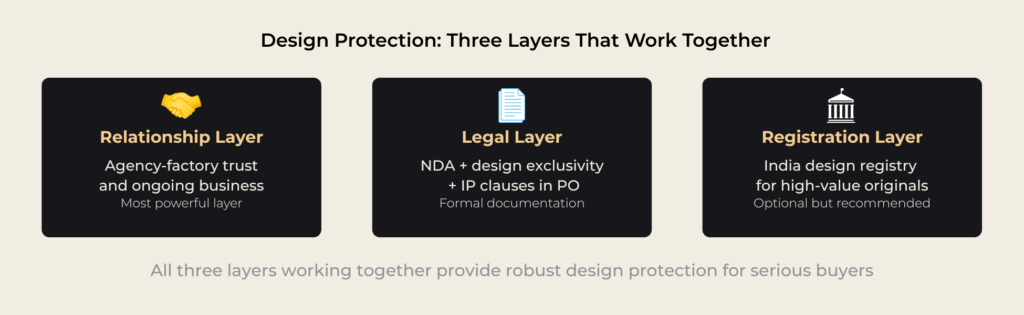
- Non-Disclosure Agreement (NDA). Signed before you share technical drawings, mood boards, or reference samples. Covers the factory and any subcontractors they use.
- Design Exclusivity Agreement. Specifies that the design will not be produced for any other buyer without your written consent. Important for designs you intend to keep exclusive.
- Intellectual Property clause in the purchase order. States clearly that the buyer retains ownership of the design and that no unauthorised reproduction is permitted.
A professional buying agency should prepare and manage these agreements as standard. If an agency does not have these documents ready and does not flag their importance during design development, that is a gap in their service.
For High-Value Original Designs: Register Them
India has a Design Registry under the Designs Act 2000. Registering an original design in India is relatively inexpensive and establishes formal legal protection. For buyers developing premium, proprietary products they intend to sell exclusively, registration is worth considering.
A buying agency with experience in design development should be able to advise on whether registration is appropriate for a given product and facilitate the process if needed.
The Practical Daily Reality - Safeguard Design by Working with Buying Agency
Beyond formal protections, the most effective day-to-day safeguard is working exclusively through a buying agency that has established, long-standing relationships with the factories they use. The agency’s reputation is a structural guarantee. They are not going to risk their business relationships on behalf of a factory that wants to copy a buyer’s design.
Your Designs Are Safe When Your Partner Is Accountable
Azoonis manages design protection formally and practically – NDA protocols, exclusivity agreements, and factory relationships built on long-term trust. Your original work stays yours.