

Ceramic Tableware from India: The EU Duty That Just Made Khurja a Serious Alternative
Table of Content
Introduction
Ceramic tableware has quietly become one of the most expensive categories to import from China. In February 2026, the European Commission raised its anti-dumping duty on Chinese ceramic tableware and kitchenware – previously ranging 13.1% to 36.1% – to a flat 79%, under Regulation (EU) 2026/274. That’s not an incremental increase. It’s a near-total repricing of the category for any buyer still sourcing from China.
What this actually costs you
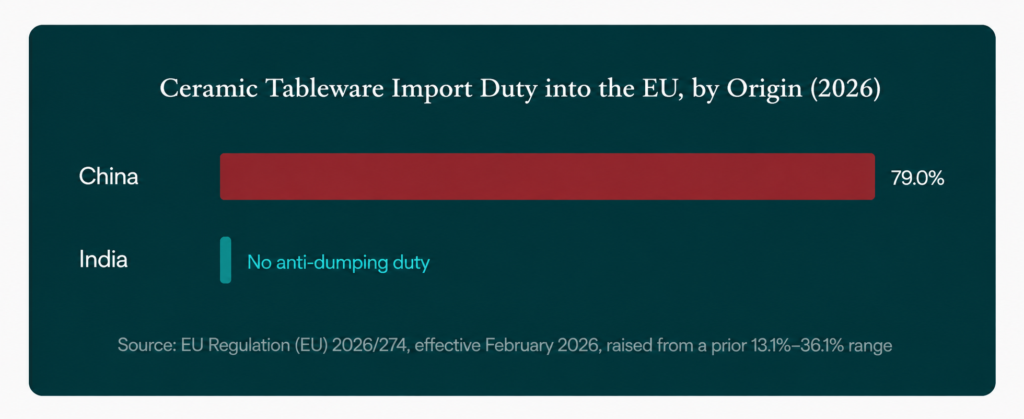
On ceramic tableware landing at €8 per unit ex-China, the new duty alone adds over €6.30 per unit – before freight, VAT, or margin. For a bulk dinnerware or hospitality tableware order, that swing is often larger than the entire manufacturing cost difference buyers used to chase between countries. India carries no anti-dumping duty on ceramic tableware into the EU, which means the landed cost gap has moved decisively in its favour.
Where India's ceramic tableware actually comes from
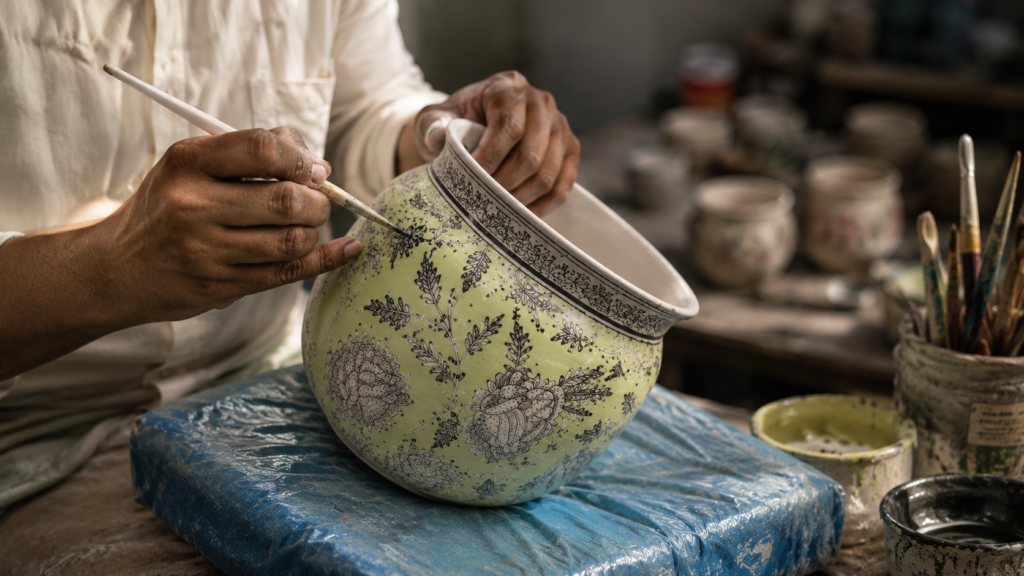
Khurja, in Uttar Pradesh, is India’s ceramic capital – a cluster with roughly 600–700 years of pottery tradition, now home to several hundred manufacturing units producing dinnerware, mugs, bowls, serving platters, and hospitality tableware. The cluster holds Geographical Indication status and already exports to over 50 countries including the US, Germany, and the UAE, so working with EU quality and food-safety expectations isn’t new territory for its better factories – many have moved to lead-free glazes and gas-fired kilns specifically to meet international standards.
What this means for a buyer: Khurja isn’t a single homogenous supplier base. It ranges from small artisan units doing hand-glazed decorative work to larger factories running consistent hospitality-grade tableware lines for hotels and restaurants. Knowing which tier of the cluster fits your order – and whether you need HoReCa-grade durability or more decorative retail tableware – is the difference between a smooth sourcing run and a mismatched factory.
WHAT AZOONIS HANDLES FOR CERAMIC TABLEWARE BUYERS
- Matching your product – dinnerware, hospitality-grade tableware, decorative ceramics – to the right tier of the Khurja cluster
- Verifying food-safety compliance (lead-free glazes) and durability standards before production, not after
- New product development – custom glaze colours, shapes, and finishes built around your brand, not just standard catalog picks
- Duty-adjusted landed cost modelling so your China-vs-India comparison reflects the real 2026 numbers
New product development, not just a supplier swap
Khurja’s artisan base makes it a genuinely strong fit for buyers who want more than a commodity swap – custom glaze finishes, unique shapes, or a hand-thrown premium line positioned against the mass-produced tableware still coming out of China. For hospitality and boutique retail buyers especially, this shift is a chance to add a “crafted in India” story to the product, not just a cheaper invoice.
We’re fielding more tableware briefs this year asking specifically for custom glaze development, not just standard catalogue matching – a sign buyers are using this shift to also upgrade their range.
Get a Ceramic Tableware Sourcing Plan
Azoonis will map your product to the right tier of the Khurja cluster, verify compliance standards, and run your duty-adjusted landed cost before you commit.