

LC, TT, or Escrow: How to Pay an Indian Supplier Without Losing Your Money
Table of Content
Introduction
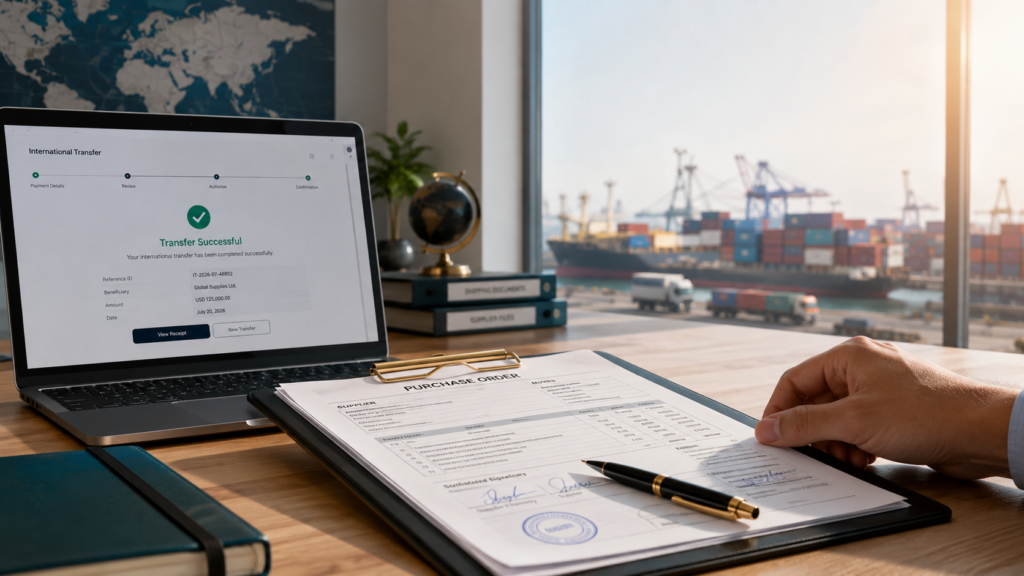
The product decision usually gets all the attention. The payment decision quietly decides how much leverage you have if something goes wrong. Here’s what each method actually protects – and where it doesn’t.
TT: the most common, and the riskiest
A straightforward wire transfer, typically split 30% advance and 70% before shipment. It’s fast and low-cost. But once the money leaves your account, you have no real leverage if the goods don’t match spec. TT only makes sense when you already trust the supplier, or when someone is physically inspecting the goods on your behalf before the balance is released.
LC: safer, but not built for small orders
A Letter of Credit means your bank only releases payment once the supplier presents the correct shipping documents. It protects both sides well. But the paperwork and bank charges tend to make sense only above roughly $20,000–$25,000 per order – below that, the overhead eats into margins, and many home decor manufacturers in India aren’t set up to handle LC documentation smoothly.
Escrow: the newer middle path
The mistake we see most often: buyers sending 50% advance on a first order with no third-party inspection built in. If nobody is checking the goods before the final payment goes out, the payment method almost doesn’t matter – the leverage is already gone.
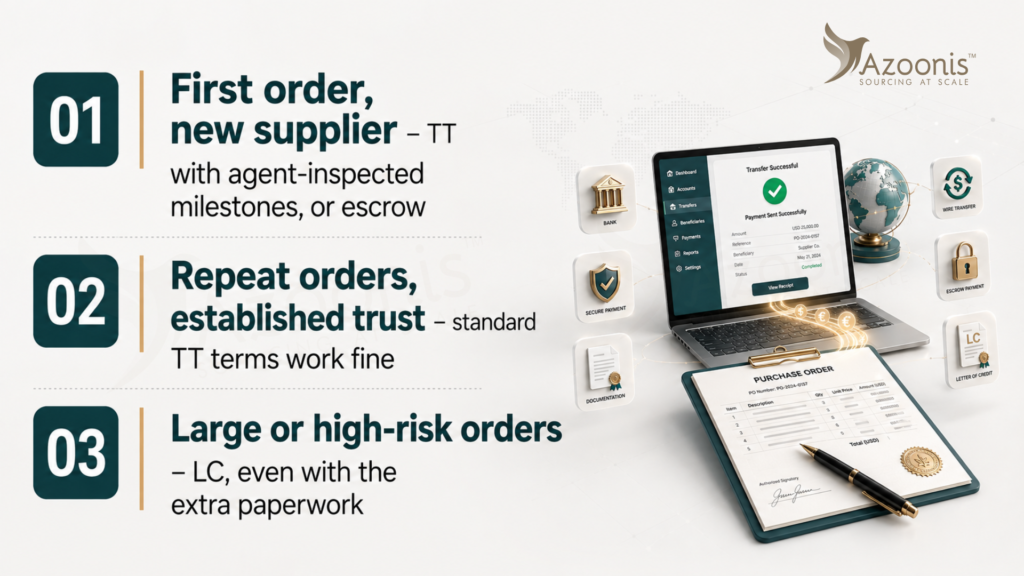
A simple rule of thumb
Pay With Confidence, Not Hope
Azoonis structures payment milestones around physical inspection at every order, so your money is never ahead of a checked shipment.