

Private Label from India: How to Put Your Own Brand on Indian-Made Home Decor
Table of Content
Introduction
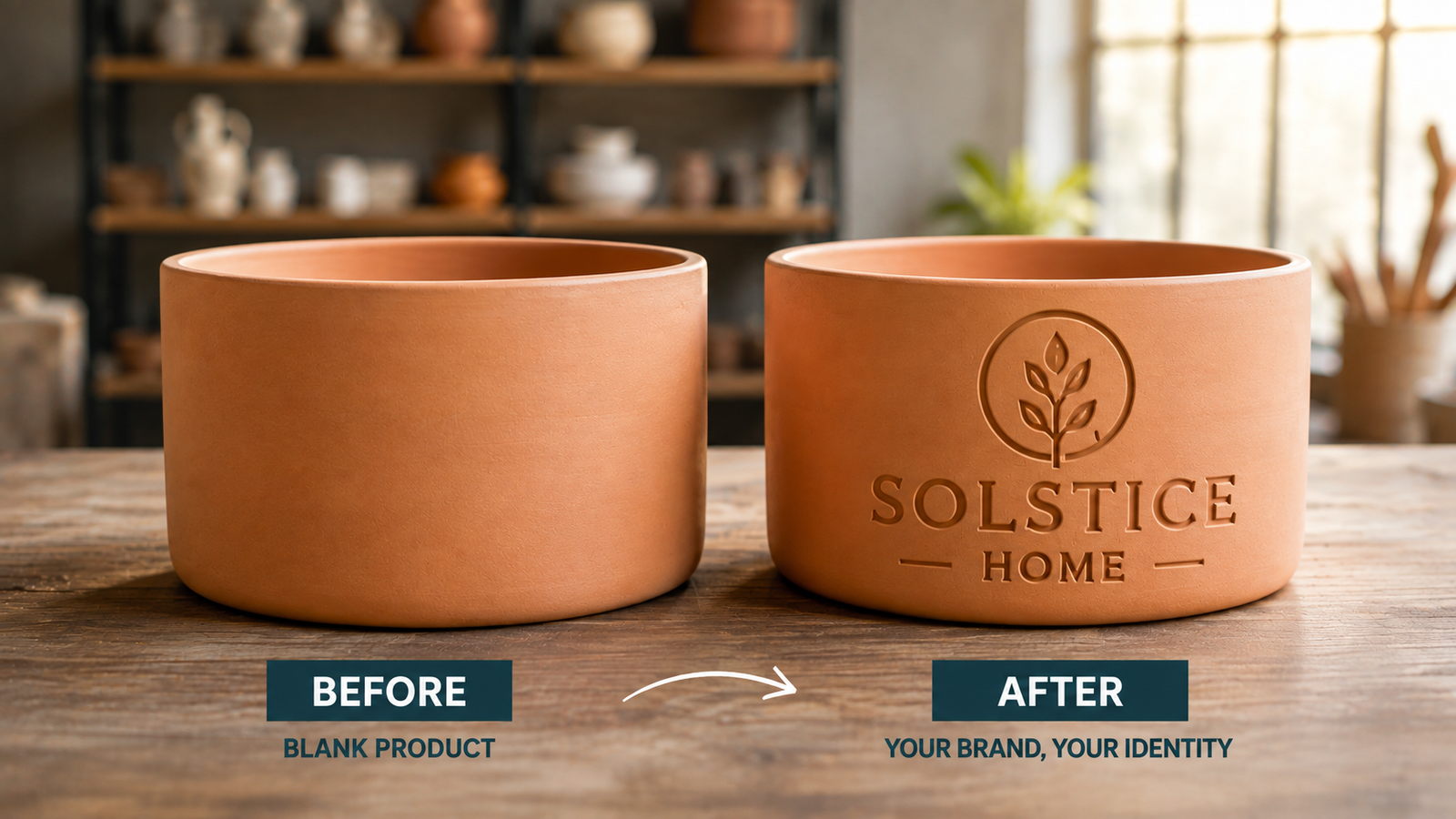
Buyers assume private labeling needs huge volumes. In India’s home decor sector, that’s rarely true – but there are real conditions that decide if it’s smooth or painful.
What private label actually covers
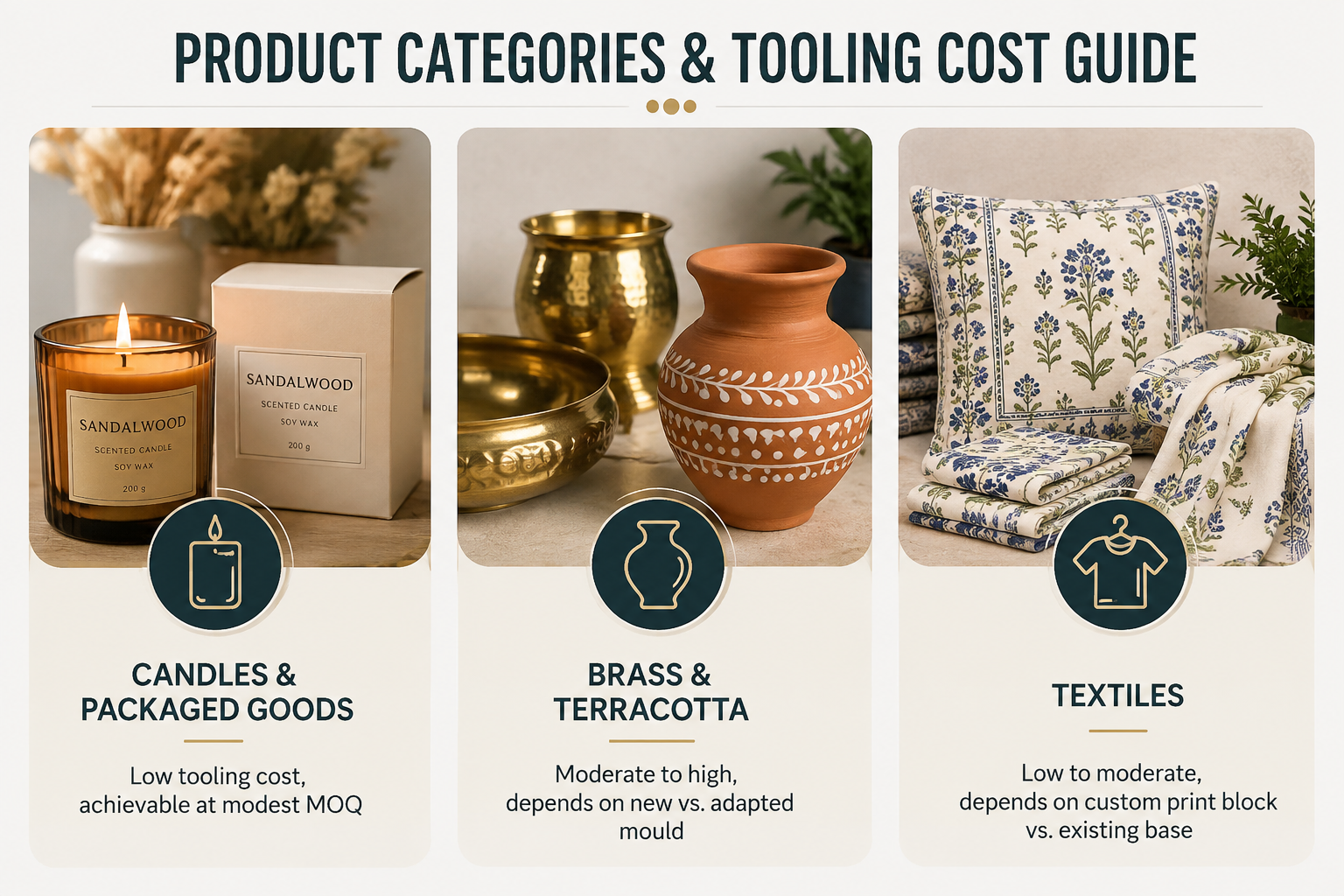
It’s rarely just a sticker on a box. For candles, it usually means custom scent development and label printing – low tooling cost. For brass or terracotta, it means your design applied to the manufacturer’s mould or casting process – higher tooling cost. For textiles, it’s your print or weave pattern on their base fabric. Each of these is a different investment, and buyers who don’t separate them end up budgeting for the wrong one.
MOQ reality by category
Candles and packaged items reach private label status at relatively low volumes, since labeling and box printing don’t require factory-level tooling changes. Brass and terracotta usually need a mould or die investment, which pushes MOQ higher – but a good sourcing agent can often find a factory where an existing mould is adapted rather than built from scratch, cutting both cost and MOQ significantly.
Tooling Investment, by category
The design ownership question buyers forget to ask
Timeline note: custom tooling adds 3–5 weeks to a standard production run. Most private label delays happen because buyers plan around a standard sourcing timeline and forget tooling is a separate, sequential step before production even starts.
Where to start
Begin with your fastest-moving SKU, not your most ambitious one. A private-labeled candle line or a custom-printed textile run is a low-risk way to test whether your brand and the manufacturing capability are a genuine fit, before committing to a full private label catalog.
Build Your Private Label Line the Right Way
Azoonis handles tooling negotiation, design exclusivity terms, and timeline planning so your private label launch doesn’t run into surprises halfway through.