

9 Cost reduction strategy in India sourcing
A practical breakdown of where sourcing budgets actually leak – and how to plug them
Ask ten importers how to source cheaper from India and nine of them will say the same thing: “find a cheaper factory.” It’s the most common instinct, and it’s usually the wrong first move. Factory-hopping for a slightly lower unit price often ends up costing more once you account for re-inspections, communication gaps, and the learning curve every new supplier relationship demands from scratch.
Over the years of running sourcing operations across India’s manufacturing clusters, we’ve noticed that the buyers who consistently land the best landed cost aren’t the ones squeezing the hardest on unit price. They’re the ones making a handful of structural decisions early – decisions that compound savings order after order, rather than one-time wins that evaporate the moment a factory raises its rates.
Here’s where those savings actually come from.
1. Location Inside India Matters More Than Most Buyers Realize
It’s easy to treat “sourcing from India” as one decision. In practice, it’s dozens of smaller decisions about which region you’re sourcing from – and the price difference between them can be significant.
Factories in Mumbai or the Delhi-NCR belt often carry higher overheads simply because real estate, compliance costs, and skilled labour cost more in those metros. The same craftsmanship – sometimes better – is available from dedicated manufacturing clusters that have quietly become category leaders: Morbi for ceramics and tiles, Jaipur and Jodhpur for textiles and block-print home goods, Saharanpur for carved woodware, Moradabad for metal decor. These towns have built their entire local economy around one category, which means deeper supplier benches, faster turnaround, and pricing that isn’t padded by metro overheads.
The catch is that these clusters aren’t always easy to access without someone already working there. That’s usually the difference between a buyer paying metro prices for cluster-quality goods, and one who isn’t.
2. Volume Helps – But Only If You Pool It Right
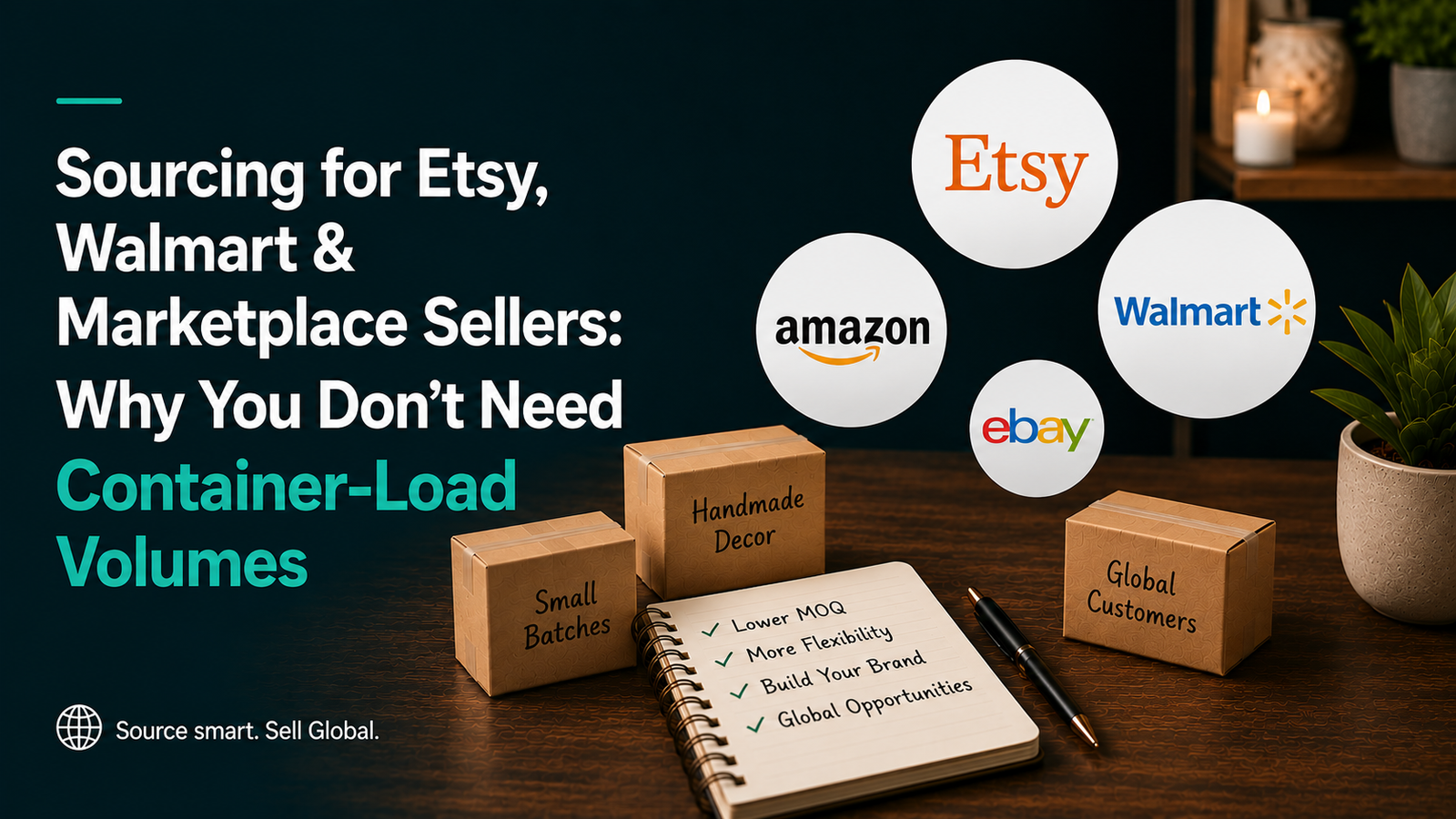
You don’t need container-scale orders to get better pricing. What actually moves the needle is how your volume is structured, not just its size.
Buyers who consolidate multiple SKUs with the same supplier group, rather than splitting small orders across unrelated vendors, get treated differently – better slot priority, more flexible minimums, and pricing that reflects a real relationship rather than a one-off transaction. Timing also matters: placing orders just ahead of a factory’s slower season can unlock pricing that simply isn’t on the table during their peak months.
3. Quality Control Is a Savings Tool, Not a Line-Item Expense
A surprising number of first-time importers try to save money by skipping or minimizing inspection. It’s understandable – inspection fees feel like pure overhead when nothing has gone wrong yet.
But the maths rarely works in their favour. One shipment of defective units that clears customs uninspected can mean air-freighted replacements, a damaged relationship with your own customers, and a factory that now assumes you won’t check next time either. A structured, pre-shipment inspection – even a basic AQL-based check – tends to cost a fraction of what a single bad batch does.
4. Get Your Incoterms Working For You, Not Against You
Many buyers default to FOB on every order without ever revisiting the decision. It’s a safe choice, but it isn’t always the cheapest one.
Depending on your freight-forwarder relationships, order size, and how much control you want over the India-side logistics leg, EXW can occasionally work out cheaper – but only if someone is actively managing pickup, documentation, and inland transport on your behalf. Get that wrong and any savings on paper disappear into demurrage charges and missed sailings. This is precisely the kind of decision where a sourcing partner earns their fee back many times over.
5. Resist the Urge to Ship the Moment One SKU Is Ready
It’s tempting to ship as soon as the first product is packed and ready. But if you’re ordering multiple SKUs from different factories, waiting an extra one to two weeks to consolidate everything into a single container – instead of sending two or three part-loads – is one of the simplest, most consistently overlooked savings in the entire sourcing process. Freight is priced by space and frequency, not by your patience.
6. Deepen Relationships Instead of Chasing New Quotes
Requesting fresh quotes from a new factory every order sounds like due diligence. In practice, it often costs more than it saves. Suppliers who see the same buyer coming back order after order tend to offer better production-slot priority, more flexible payment terms, and – critically – more honesty about delays and issues, because the relationship is worth protecting on their end too.
The savings from repeat business rarely show up as a lower unit price on paper. They show up as fewer surprises, fewer expedited shipments, and fewer quality escalations – all of which are cost centres in disguise.
7. Check What Your Supplier Is Already Eligible For
Not every saving comes from your side of the negotiation. Indian exporters registered under schemes like RoDTEP or holding an EPCG licence often have lower effective costs themselves – and a supplier who’s compliant and export-savvy is usually in a better position to pass some of that benefit along, or at least hold pricing steady when raw material costs move. It’s worth asking directly whether your supplier is registered under any current export incentive scheme, rather than assuming pricing is fixed either way.
The Bigger Picture
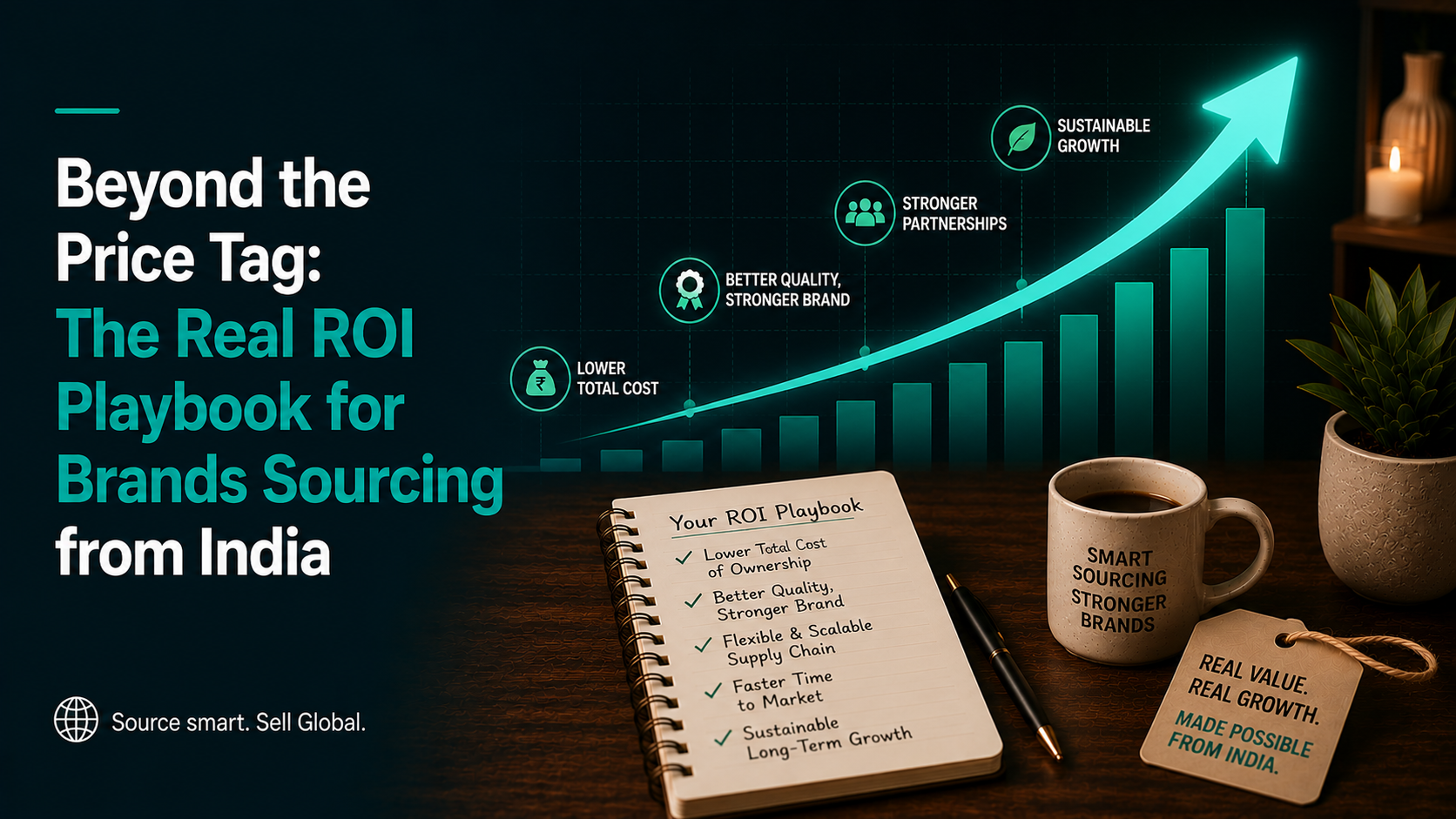
None of these seven levers require negotiating harder or accepting lower quality. They require making a few structural decisions early – where to source from, how to consolidate, when to inspect, which Incoterm actually fits your shipment – and sticking with suppliers long enough for those decisions to compound.
India’s manufacturing base is large enough and diverse enough that cost savings are genuinely there to be found. The buyers who find them consistently are rarely the ones squeezing the hardest on price. They’re the ones who’ve built a sourcing process – often with a partner already on the ground – that removes the guesswork from every step in between.
Save on Structure, Not Just Price
Azoonis maps your orders to the right manufacturing cluster, structures consolidation and timing for better slot priority, and builds Incoterm decisions around your actual logistics setup – so savings compound order after order instead of evaporating the moment a factory raises its rate.