

Candles from India: Why the EU Duty on China Just Changed Your Sourcing Math
Table of Content
Introduction
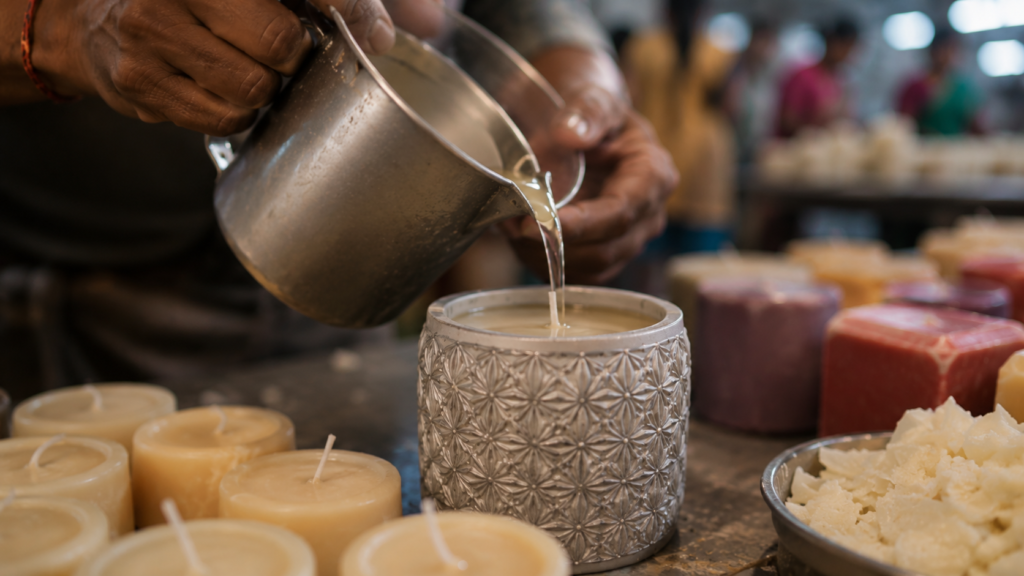
Candles are one of the categories where “China is cheaper” has been the default assumption for over a decade. That default broke in January 2026, when the European Commission imposed a definitive anti-dumping duty on candles, tapers, and similar products originating from China, ranging from 56.7% to 60.3%, locked in for five years under Regulation (EU) 2026/157. This isn’t a temporary tariff spike. It’s a structural change to landed cost that most buyers haven’t recalculated for yet.
What EU duty actually costs you
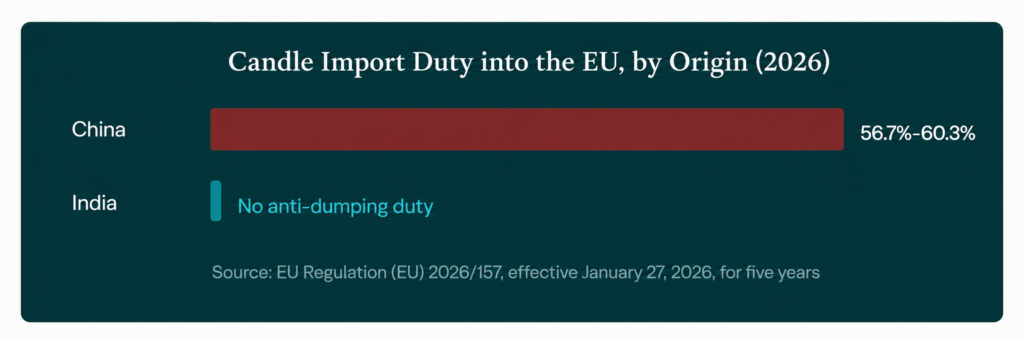
On a candle shipment landing at €10 per unit ex-China, that duty alone adds roughly €5.70–€6 per unit, before freight, VAT, or margin. On a container-sized order, that’s the difference between a healthy margin and a shipment that barely breaks even. India carries no anti-dumping duty on candles into the EU – the cost comparison that held for years no longer holds.
Candle Import Duty into the EU (2026): China 56.7%–60.3% · India – no anti-dumping duty. Source: EU Regulation (EU) 2026/157, effective January 27, 2026, for five years.
Where India's candle manufacturing actually is
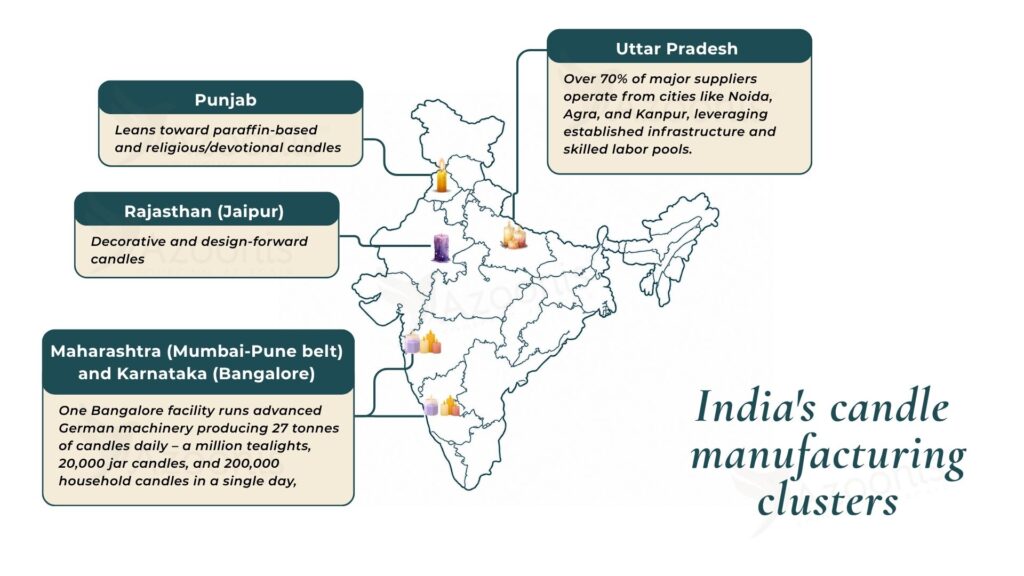
Secondary clusters:
- Punjab – leans toward paraffin-based and religious/devotional candles, helped by proximity to petroleum refining for raw wax.
- Rajasthan (Jaipur) – decorative and design-forward candles, tying into the state’s broader handicraft/export ecosystem.
- Maharashtra (Mumbai-Pune belt) and Karnataka (Bangalore) – this is where the more modern, export-oriented, higher-automation setups are. One Bangalore facility runs advanced German machinery producing 27 tonnes of candles daily – a million tealights, 20,000 jar candles, and 200,000 household candles in a single day, which is a different tier of operation than the Moradabad handicraft-style units.
Why it splits this way, practically: these clusters offer integrated ecosystems with raw material access, skilled labor, and logistics support, and Uttar Pradesh-based suppliers benefit from robust transportation networks connecting to Delhi’s distribution channels, while Maharashtra-based manufacturers capitalize on access to international shipping routes via Nhava Sheva/Mundra.
So if you’re sourcing decorative or handcrafted candle SKUs for gifting/home décor, UP (Moradabad especially) and Rajasthan are where the artisanal capability is. If a client wants scented/jar candles at volume with tighter QC and modern equipment, Bangalore/Pune-belt factories are the better fit – worth distinguishing when you’re pitching capability to buyers, since “candles from India” covers two genuinely different manufacturing profiles.
What Azoonis Handles For Candle Buyers
- Matching your product type – decorative, scented, pillar, jar – to the right cluster and factory, not just the cheapest quote
- In-production quality checks on wax consistency, scent throw, and finish, not just a final pre-shipment inspection
- New product development support – custom scent blends, mould adaptation, seasonal/holiday ranges built around your brief
- Duty-adjusted landed cost comparisons so you know your real EU-side number before committing
New product development, not just sourcing
Candles are one of the easier categories to develop something genuinely new in – a custom scent profile, a seasonal shape, a sustainable soy or beeswax blend positioned against the mass-market paraffin candles still coming out of some Chinese suppliers. Buyers who treat this purely as a sourcing swap miss the opportunity to also refresh their range while they’re at it.
We’re seeing more EU buyers use this shift as the moment to also test a new scent line or premium finish, not just replace their existing SKU one-for-one.
Get a Candle Sourcing Plan, Not Just a Quote
Azoonis will map your product to the right India cluster, run your duty-adjusted landed cost, and scope any new development you want to bring into the range.