


The Quality Myth: Why Handmade Does Not Mean Inconsistent
Table of Content
Introduction
Ask any buyer who has sourced from India about their biggest frustration and quality consistency comes up fast. Not quality in general – most will say the good pieces are genuinely beautiful. The frustration is variability. The same product, different batches, different results.
This is a real pattern. But the diagnosis most buyers land on – India just makes inconsistent products – is wrong. And acting on a wrong diagnosis produces the wrong solution.
Why Indian Handmade Products has quality variability
These are not exotic interventions. They are standard practice in any well-managed sourcing programme. Buyers who experience consistent quality from India are the ones who have these structures in place, not the ones who found better factories.
Handmade production has natural variation built in. A piece stamped by a human hand will differ slightly from the next piece. This is not a defect. It is the fingerprint of craft, and in many categories it is exactly what buyers customers are paying for.
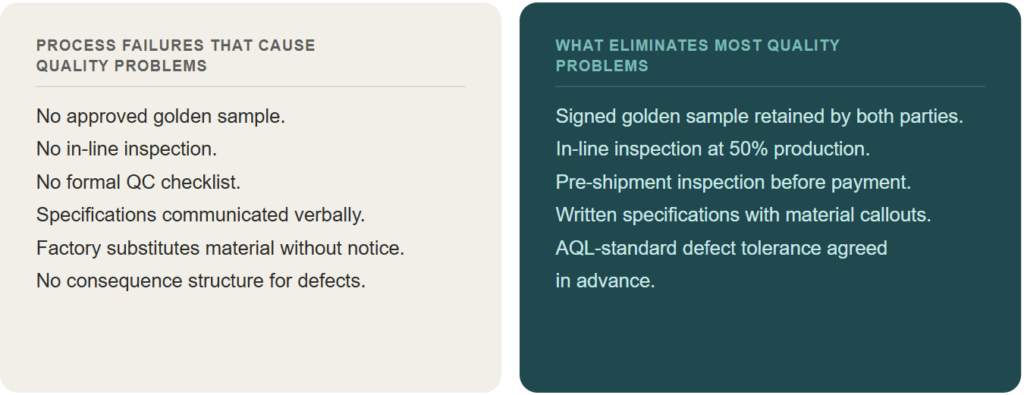
The quality problem buyers actually experience – wide variation, defects that should not exist, production that does not match the approved sample – is almost always a process failure, not a capability failure.
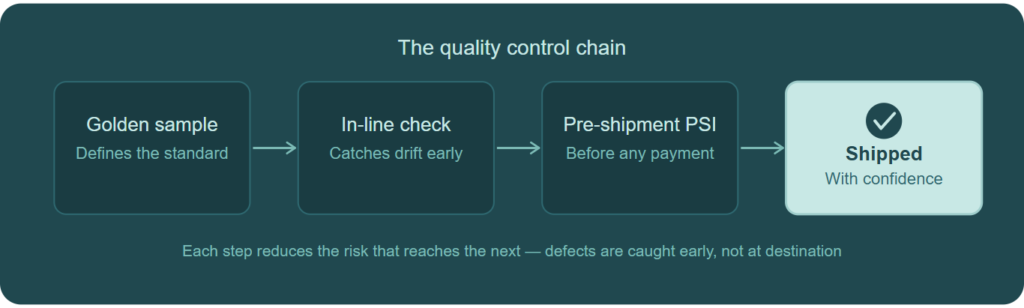
The Golden Sample Protocol: The Single Most Impactful QC Tool for India Sourcing
When a sample is approved, most buyers email confirmation and move on. The factory begins production using their interpretation of what was approved – which may not match the buyers interpretation.
A golden sample protocol changes this. The approved sample is photographed with visible measurements. It is signed by both factory and sourcing representative. Both parties retain a physical copy. This sample is present at the QC inspection – the inspector compares every checked piece against it.
Most quality disputes trace back to the same root: nobody defined acceptable clearly enough before production began. The golden sample is the definition. Without it, quality is whatever the factory thought you meant.
The Variation That Is Normal - and How to Use It
Some variation in handmade products is inherent and desirable. A hand-hammered brass bowl will have slight surface differences from the next. A block-printed cushion will have minor placement shifts between prints. These are not defects.
The key is defining acceptable variation ranges before production begins, and framing this in product listings so end customers understand what they bought. Each piece is unique is not a disclaimer. In today’s market for authentic, story-led home decor, it is a selling point – if positioned with confidence.
The buyers who win on Indian artisan products are not the ones who try to make them look machine-made. They are the ones who lean into the craft character and price accordingly.
Quality You Can Count On
Azoonis builds structured quality control into every programme we manage – golden sample protocol, in-line checks, pre-shipment inspection, and test lab coordination for EU compliance. Quality is not an afterthought. It is the service. Book a call today for your India sourcing at scale.