

Why Smart Buyers Are Moving from China to India in 2026-27 (Not Because They Have To)
Table of Content
- Introduction
- The Numbers First
- Why This Isn't Just a Tariff Story
- A Direct Comparison: Where India Wins, Where China Still Leads
- The Product Differentiation Argument Is the One That Matters Most
- What the Strategic Portfolio Looks Like
- The Honest Challenges of the Shift
- Which Categories Make the Most Sense to Shift First
- The Window Is Open. Not Forever.
- The One Decision That Changes Everything
Introduction
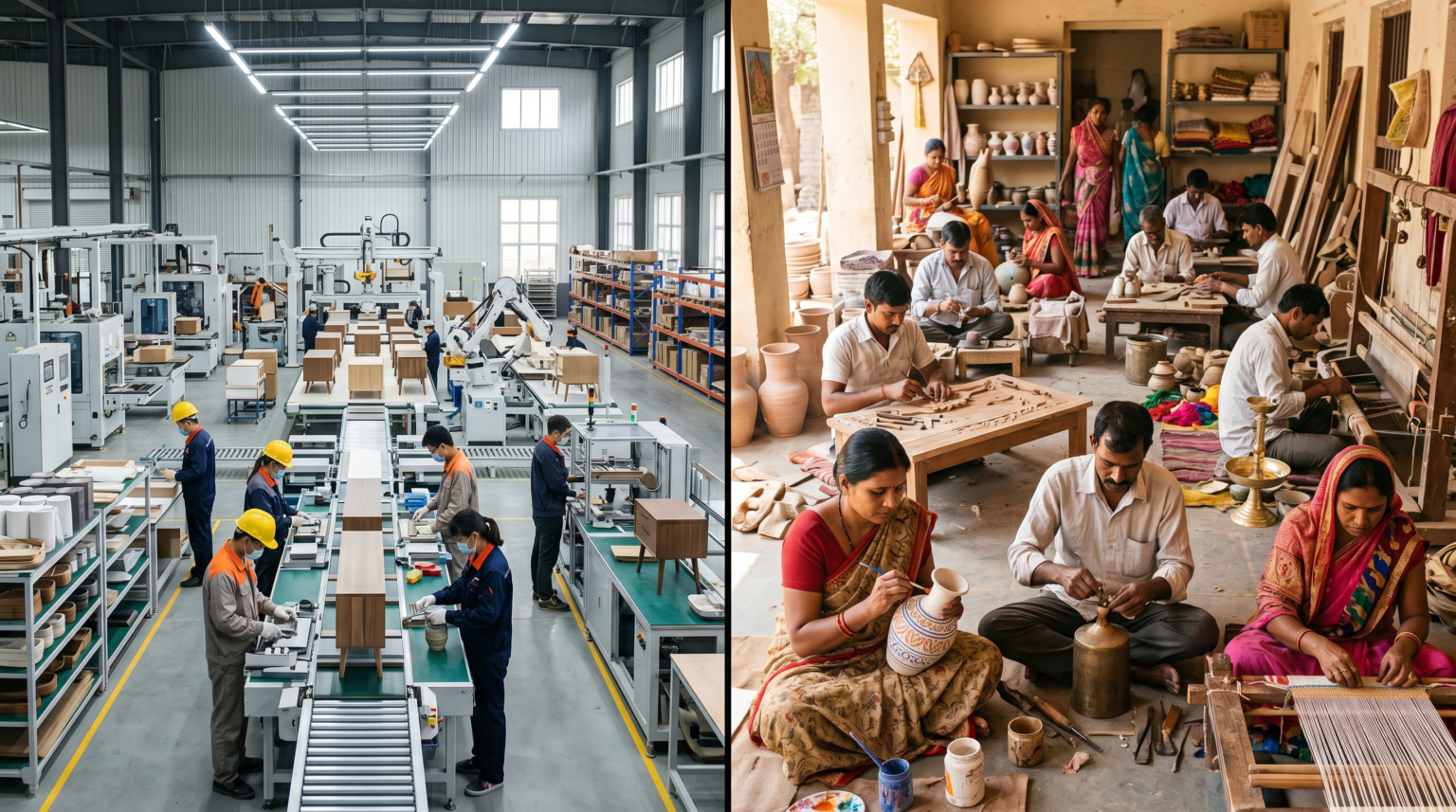
That default is eroding. Not catastrophically, but structurally. And the buyers who are responding strategically rather than reactively are discovering something interesting: India isn’t just a backup. For certain categories, it’s a straight upgrade.
The Numbers First
18%
Annual growth in EU imports of Indian home decor and handicrafts since 2021
3X
China’s average manufacturing wage has tripled in the past decade
25%
US Section 301 tariff on many Chinese-made home decor and furnishings categories
These aren’t trends that happened overnight, and they’re not going to reverse. China’s cost advantage in labour-intensive categories is real but shrinking. India’s manufacturing capability in those same categories is real and growing.
Why This Isn't Just a Tariff Story
But if tariffs were the only reason to consider India, it would be a fragile rationale. Tariff policy changes. Trade deals shift. What doesn’t change is this: India makes certain categories of products that cannot be replicated anywhere else, at any price, with any amount of tariff relief.
A hand-knotted rug from Bhadohi, a block-printed tablecloth from Jaipur, or a hand-hammered brass vase from Moradabad aren’t cheaper versions of Chinese products. They’re categorically different things – and they sell at margins that reflect that difference.
The buyers who understand this aren’t replacing China with India. They’re building a deliberate portfolio where China handles volume and speed, India handles differentiation and craft value, and the margin mix is better overall.
A Direct Comparison: Where India Wins, Where China Still Leads
| Factor | India | China |
| Artisanal / handmade depth | Unmatched globally | Limited in artisan categories |
| Design differentiation potential | Very high (4,000-year craft heritage) | Moderate (industrial design-led) |
| Speed and lead times | 45-90 days (plan ahead) | 15-30 days (industry-optimised) |
| Mass production scale | Strong, growing | Unmatched at scale |
| Labour cost trajectory | Competitive and stable | Rising significantly |
| EU duty (home decor) | 0-3.7% (GSP preference) | 0-6.7% (MFN, no preference) |
| US tariff exposure | Minimal (no Section 301) | 7.5-25% Section 301 |
| English communication | Strong across supply chain | Variable, often through trading companies |
| Sustainability story | Authentic (natural materials, artisan craft) | Requires active verification |
| Compliance infrastructure (EU) | Growing, agency-dependent | Well-established, widely available |
The Product Differentiation Argument Is the One That Matters Most
These are not niche items. They’re mainstream premium. And the market for them is growing – the “authenticity premium” is a documented retail trend across European and US home decor markets.
The brands building ranges around this have a structural margin advantage. A hand-block printed textile from Jaipur, produced at $8 FOB, retails at €45 in Germany. The gross margin structure isn’t comparable to mass-produced alternatives because the customer isn’t comparing them to mass-produced alternatives.
What the Strategic Portfolio Looks Like
- 40-50% from India: Premium artisanal pieces – metalware, textiles, ceramics, carved wood, natural fibre. High differentiation, strong storytelling, premium retail pricing.
- 30-40% from China: Volume basics, seasonal decoratives, standardised furniture, lighting. Speed and replenishment efficiency.
- 10-20% from Vietnam/Indonesia: Natural furniture (rattan, teak), category-specific craft.
This isn’t a formula. It’s a direction. The right allocation depends entirely on your market, your brand positioning, and your customers’ appetite for story-driven products. But the principle holds: India plays a different role than China in a well-constructed sourcing portfolio, and trying to make it play China’s role will frustrate everyone.
The Honest Challenges of the Shift
- Lead times are longer. India’s artisan manufacturing runs at a different pace. You need to buy further forward on the calendar. This is an operational adjustment, not an India problem.
- Supplier access is harder without local support. India’s manufacturing is cluster-based and relationship-driven. Cold-emailing factories from overseas produces low response rates. A buying agency isn’t optional if you’re serious about this shift.
- Quality requires active oversight. Handmade products need inspection. Build quality control into your programme from day one, not as an afterthought after the first problematic shipment.
- Payment terms are more conservative. Indian artisan manufacturers don’t offer Net-30 to first-time buyers. Plan for 30-50% advance as standard until a relationship is established.
The key insight: Every one of these challenges is solved by having the right on-ground sourcing partner. The buyers who make this shift successfully almost always do it through a professional buying agency with cluster presence, supplier relationships, and quality control infrastructure already in place. The ones who try to replicate their China model in India spend 18 months learning the same lessons the hard way.
Which Categories Make the Most Sense to Shift First
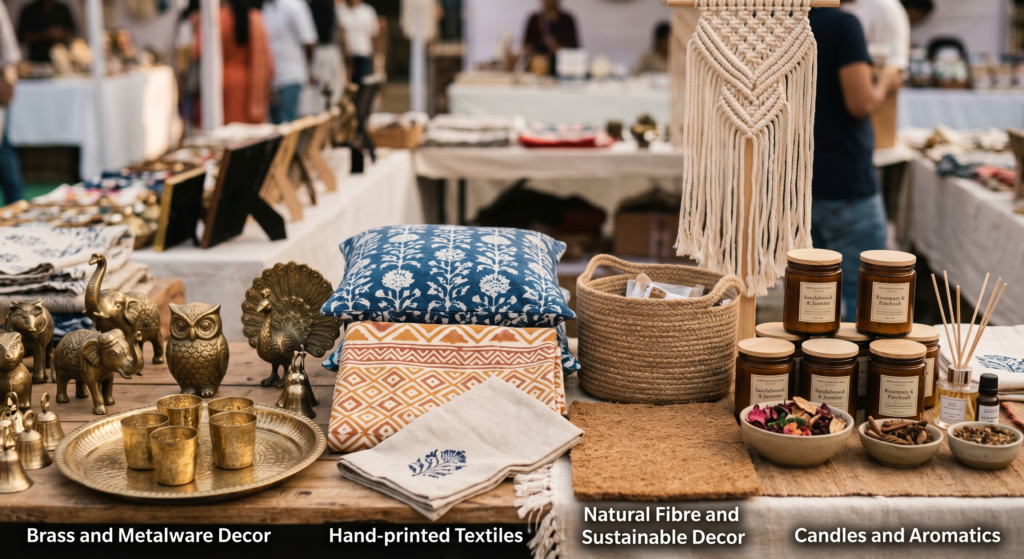
- Brass and metalware decor: India’s advantage is definitive. Moradabad produces metalware at quality and price that China’s metalware sector genuinely cannot match in artisanal categories.
- Hand-printed textiles: Block-printed cushions, table runners, and bed linen – categories where authenticity is visually apparent and drives retail premium.
- Natural fibre and sustainable decor: Bamboo, jute, seagrass, cotton rope – categories where India’s sustainability credentials are genuine and EU retail demand is strong.
- Candles and aromatics: India is a major global producer. Quality has improved significantly. Margins are strong.
Categories where China still makes more sense to source from: mass-produced furniture, electrical home decor (lamps, LED items), large-volume standardised textiles where consistency and speed matter more than artisanal character.
The Window Is Open. Not Forever.
This is not a warning or a pressure tactic. It’s a straightforward observation from the ground: the gap between India’s quality and its pricing is closing. The buyers who are here now are getting better value for their investment than the ones who’ll arrive in three years.
The One Decision That Changes Everything
India rewards relationships. The buyers who access the best factories, the best prices, and the most consistent quality are not the ones with the biggest cheque books. They’re the ones who are trusted – and trust, in India’s manufacturing ecosystem, is built through local presence and ongoing commitment.
You can build that trust yourself over 3 to 5 years. Or you can access it from day one by working with a buying agency that’s already built it.
Building Your India Sourcing Programme?
Azoonis works with importers across Europe and the US who are expanding their India sourcing – whether they’re starting fresh or scaling an existing programme. We bring the supplier relationships, the cluster knowledge, and the quality infrastructure so you don’t have to build it from zero.